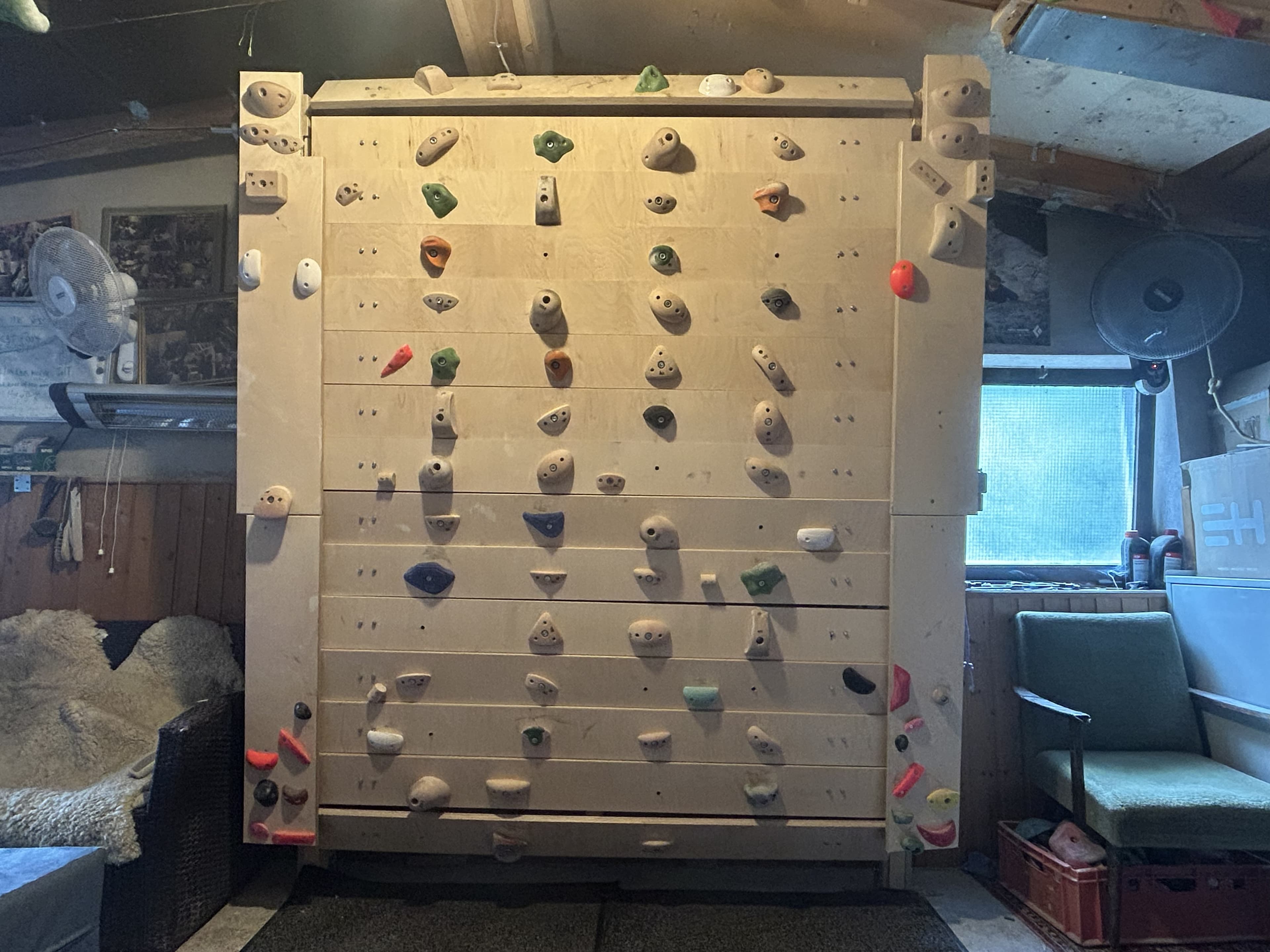
If you want to build a DIY Endless Climbing Wall at home, one of the first things you need to figure out is how the wall will be mounted and supported.
This decision affects almost everything: how stable the wall feels, how much space it needs, whether you have to drill into the building, and how safe and reliable the final setup will be.
There is no single best mounting solution for every room. Some spaces allow floor anchors and upper beam support. Others do not. Some home climbers want the most solid and direct setup possible. Others need a no-drilling option or a structure that can be adapted to an unusual room.
This guide gives you a clear overview of the main Endless Climbing Wall mounting options so you can understand which direction fits your space best.
Quick Answer
The best DIY Endless Climbing Wall mounting option depends on your room, your building structure, and whether you can drill into the floor or walls. In general, anchored setups are often the most direct and stable solution, while freestanding and hybrid designs are useful when drilling is limited or not possible.
Why Mounting Matters on an Endless Climbing Wall
An Endless Climbing Wall is different from a fixed training board or a simple home climbing wall.
Because the wall rotates and can be inclined, the support system must handle more than just static weight. It must stay stable under movement, resist pulling forces, and transfer loads safely into the floor, wall, beam, or support frame.
A good mounting concept helps with:
- long-term stability
- predictable wall behavior
- safer load transfer
- better confidence while climbing
- a setup that actually fits your room
If the support concept is wrong, the build can become unnecessarily complicated, unstable, or unsafe.
The Four Main Mounting Options
Most DIY Endless Climbing Wall setups fall into four main categories:
- anchored into the floor and upper structure
- wooden base platform with upper wall support
- fully freestanding construction
- hybrid or combined solutions
Each approach can work well if it matches the room and is built correctly.
Option 1: Anchored Into the Floor and Upper Beam
This is often the most direct and confidence-inspiring solution if your building allows it.
In this setup, the lower part of the wall frame is fixed into the floor, while the upper part is fixed into a strong structural beam or another suitable top anchor point. This allows the building itself to carry much of the load.
Why people choose this option:
- very solid feel
- compact support concept
- direct load transfer into the building
- works well when the wall is tilted
This approach is especially attractive for garages, workshops, or other spaces where strong structural anchor points are available.
Option 2: Wooden Base Platform With Upper Wall Support
This option is useful when floor drilling is not possible, but a strong wall can still be used.
Instead of anchoring the lower frame directly into the floor, the wall is supported on a solid wooden base platform. The upper part is then fixed into wall-mounted support beams or another strong upper structure.
Why people choose this option:
- avoids direct floor anchoring
- still transfers some load into the building
- useful in rooms where wall fixing is possible
- can be a practical compromise between anchored and custom-built support
This setup requires a well-built timber base that behaves like one rigid structure.
Option 3: Fully Freestanding Endless Climbing Wall
A freestanding Endless Climbing Wall does not rely on floor anchors or wall anchors. The entire structure stands on its own.
This is often the most attractive option when drilling is impossible or unwanted, but it also requires the most careful structural planning. A freestanding system must generate its own stability through footprint, stiffness, bracing, and overall frame design.
Why people choose this option:
- no drilling into floor or walls
- useful in rental spaces or sensitive rooms
- independent from the building structure
- flexible in situations where anchoring is not possible
Freestanding designs can work very well, but they usually need more material, more bracing, and more space.
Option 4: Hybrid or Combined Solutions
Many real rooms do not fit neatly into one category. That is where hybrid support concepts become useful.
A hybrid Endless Climbing Wall setup combines elements from two or more mounting options. For example, you might use a wooden base platform together with upper anchors, or combine partial freestanding support with selected structural fixings.
Why people choose this option:
- adapts to unusual home spaces
- works around drilling limitations
- allows more custom solutions
- can be the best real-world fit when standard options do not fully work
Hybrid solutions are often highly practical, as long as the load path remains clear and the whole structure stays stiff and predictable.
Which Mounting Option Fits Your Space?
The right DIY Endless Climbing Wall mounting option depends on a few simple questions.
Ask yourself:
- Can you drill into the floor?
- Do you have a strong wall or beam available?
- Do you want a permanent setup or a more flexible one?
- How much free space do you have around the wall?
- Do you need a no-drilling solution?
- Are you comfortable building a more complex support frame?
In many cases, the answer becomes clearer once you know what your room allows structurally.
A Simple Way to Think About It
If your space allows drilling into the floor and a strong upper beam, an anchored setup is often the most direct route.
If you cannot drill into the floor but can still fix into a wall, a wooden base platform with upper support may be the better option.
If you cannot drill at all, a freestanding setup may be the only realistic path.
If your room is awkward or restrictive, a hybrid solution may give you the flexibility you need.
Why This Topic Matters Before You Start Building
Many people want to begin with the frame, the rotating system, or the climbing surface. But in practice, the support concept should come first.
Before you build your Endless Climbing Wall, it helps to understand:
- where the loads will go
- what the building can safely support
- how much stiffness the structure needs
- which setup is realistic for your exact room
Making this decision early helps avoid wasted work, poor design choices, and expensive rebuilds later.
Final Thoughts
The best Endless Climbing Wall mounting option is not the same for everyone. It depends on your room, your structural possibilities, and how you want the wall to behave.
The good news is that there is more than one workable path. Anchored, freestanding, wooden-base, and hybrid setups can all make sense in the right environment.
The key is choosing the support concept that matches your space from the start.
In the next article, I go deeper into how to anchor an Endless Climbing Wall safely, including the role of lower anchors, upper fixing points, and why proper structural support matters so much on a rotating climbing wall.
Related Questions
What is the best mounting option for a DIY Endless Climbing Wall?
The best option depends on your room and whether you can drill into the floor or walls. Anchored setups are often the strongest and most direct, while freestanding and hybrid designs offer alternatives when drilling is limited.
Can you build an Endless Climbing Wall without drilling?
Yes. A fully freestanding Endless Climbing Wall can be built without drilling into the floor or walls, but it usually requires a larger and more heavily braced structure.
Is a freestanding Endless Climbing Wall safe?
A freestanding Endless Climbing Wall can be safe if it is properly designed with enough stiffness, bracing, and stability. The structure must be planned very carefully.
What support structure does a rotating climbing wall need?
A rotating climbing wall needs a support structure that can safely carry weight, resist pulling forces, and remain stable when the wall moves or is inclined.